Sunday, May 8, 2011

You need at least one fantastic suit in your wardrobe.

1. You need at least one fantastic suit in your wardrobe.

If you don’t have much money then probably the one item to make a large one off investment in is your jacket. Don’t feel shy spending at least $500 for a great suit – even more if you can afford it. Then substitute it with a couple more light-weight suits and jackets in the $200-$400 range to help mix things up.

2. Always make sure your suits and shirts fit well around the collar.

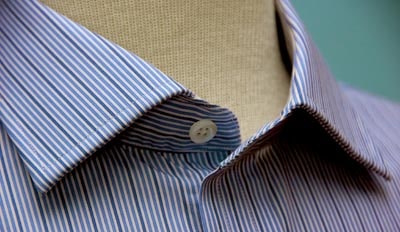
Don’t buy over sized collars, they come across as slack and lazy. And too tight, well, we all need to breathe now don’t we??

3. Match the suit to your lifestyle

Some men can easily mix patterns, suits, stripes, loud pocket kerchiefs, silky shiny materials, hats, top hats, and blinged up cuff links. Some cannot!! It’s important to find the style that suits your personality, fits your career (bling in a conservative law firm certainly won’t go down that well!) and helps you ease forward in the game of life.

4. Accessorize!

Ties are the one accessory for men that can really be personalized and allow you to express yourself and add some color and diversity. Ties can be suited up or dressed down with jeans and a white shirt (open top button and loose knot). Wander into second stores to dig up some classic and vivid ties with vibe and spirit, and perhaps spend a bit more on some nice new (perhaps black or red) versatile ties.

5. Find the right fit for your body:

* If you’re a big guy:

Remember there’s more of you to love, so wear your bulk with pride. Wear lightweight, suits built from heavier textiles will only add weight. Soft, worsted wools are your best friend. Choose darker colors which give desired slimming factor plus they’re classy and classic. If you’re going to stripe it, make it a solid vertical to create a sleek, slender visual. The jacket: Two buttons are optimal – they won’t draw attention to your bulky frame and stay single on the vent, which will give you the extra room you need minus the extra attention.

* If you’re tall and lean

16cast4

Add weight with heavier fabrics – on a tall, skinny guy, lightweight fabrics will hang and make you look all the more frail. Heavier wools like tweed or a heavier weight worsted wool that hold their form is the smart decision; and give you much-needed proportion and the appearance of additional weight. Colours – opt for the greys and classic browns – Lighter colors, will add weight to your overall look. Jacket? Three buttons create height and length, tall guys, with their longer torsos, can pull this look off successfully. Keep it classy with the single vent – Although taller, slimmer men tall, skinny men have two options for the vent: we advise that you stick with a single-vent or ventless jacket which is always the classier choice.

* If you’re slight and shorter than average

Avoid loud patterns – The print of an overly bold pattern screams for attention and will only draw attention to your slight frame. Subdued, chilled out colours and small stripes, if any, will be far more stylish for you. Stripes – For shorter men, the next best thing to a shoe with a higher sole is a suit with vertical stripes. As stripes run top to bottom, they tend to draw the eye upward. Plus, they also lengthen your frame by elongating the look of the suit; giving you the illusion of appearing taller than you really are. Go for double vents – Small guys, the double-vent jacket was created with you in mind. The dual slits (or vents) along the side emphasize the outside lines of the body; in doing so, they establish an attractive, longer silhouette that complements and lengthens your frame.
More about suits …

The Bespoke Suit:

These are custom made by a tailor from a pattern created entirely from the client’s measurements, giving the best-fit and free choice of fabric. Some of the most expensive suits in the world are painstakingly hand made by an increasingly scarce breed of extremely skilled tailors.

These tailors know how to make suits that hide physical flaws and highlight attributes, without sacrificing comfort. Machine use is minimal, and each and every nuance of a client’s spoken and unspoken needs are met and often exceeded. Brioni, Attolini, Kiton, Luigi Borelli and Caraceni are some of the best known names in Italian bespoke suits. Some of the world’s most expensive suits are the Kiton K50s exclusively tailored by Senor D’Orsi, one of the finest tailors in the world. He makes not more than 50 suits in a year, each costing up to 50,000 USD. The fabrics used on a bespoke suit are usually the best, mostly worsted wool for business suits. These fabrics are used in the counts of 80′s and 90′s, or super 100′s, super 150′s and higher. The counts in the range of 80′s and 90′s also feel great and usually last longer than higher counts made at even the best clothing manufacturers. For those who can afford it, a bespoke suit made in the super 150′s fabric can be an absolute asset. It feels fabulously comfortable to wear and looks even better.

Made-to-Measure Men’s Suits:

Not every one is privileged enough to get a bespoke suit made, but there is a range of suits which is nearly as good. With made-to-measure suits, (a pre-made pattern modified to fit the client, with a limited selection of options and fabrics is available) it is possible to achieve a degree of customization because the tailor takes up to 25 measurements of an individual body, and these are then sent to the factory. Here, alterations are made to already available basic patterns in order to achieve the best fit possible. Special requests like extra pockets, specific fabrics and linings, and a certain design and style can be accommodated. Some of the best fabrics, threads and interlinings are used, which helps guarantee a quality suit. But the production is assembly line, and many tailors work on the suit at different stages of production, unlike the single tailor for the bespoke suit. Ermenegildo Zegna su Misura does some of the best fittings in the made-to-measure industry. A good deal of technology goes into the making of these suits and their fabrics. Some Zegna suits use fabrics like Micronsphere which has all the great qualities of a worsted but is also stain-resistant, or Cashco, which is a blend of cashmere and cotton, making it an all-weather fabric.

Off-the-peg Designer Men’s Suits:

Though these cost about half that of a good made-to-measure Italian suit, they are still worth the money. The first and foremost advantage is speed, no agonizing fittings and long waits for the suit to get ready, and if chosen carefully, an off-the-peg suit from Prada, Armani, Versace or Gucci fits quite well and is unbeatable for casual elegance and comfort. The trick is to shop around for the right size, cut and look. What is more, off-the-peg suits are good for those who are looking for variations and for different types of fabrics and styles. The beauty of an off-the-peg designer suit lies in its ability to change from season to season, and to bring in a hint of casual flair to the conservative world of men’s business clothing.

Ready to Wear:

These suits are mass produced, least expensive and most common. You’ll find them in department stores and they’re a good option for the budget conscious shopper. If you’re diligent in shopping carefully and following the tips above on getting the best fit for you, these suits may allow you to look suitably elegant in business attire and save your pocket at the same time.
In all, wearing a tailored and well fit suit could do wonders for your love and work life. A man in a fabulous suit is a great creature to cast your eyes on; he commands respect without even uttering a word and he walks confidently, with grace and sleek power, which is why here at MenStylePower, we’re highly motivated to encourage all dudes to suit it up.
What Thomas Merton said in the first part of the 20th Century is still relevant today. You can’t ignore “… men in bowlers and dark suits with their rolled-up umbrellas. Men full of propriety; calm and proud, neat and noble.”

Saturday, March 26, 2011

THE IMPORTANCE OF PROPORTION

THE IMPORTANCE OF PROPORTION

The Importance of Proportion in Classic Men’s Clothing
The gentleman who gives attention to proportion in his apparel always looks good. Alas, this detail is sadly under valued nowadays; it is rare to discover an adult male whose manner is understated elegance, the sort of gentleman who folks feel is always well dressed without knowing why. Most apparel sold in shops is available in just a few standard sizes, and are built according to the fashion of their day. It is true that with suitable tailoring, many gentlemen can get a decent fit out of a retail suit or other garment, but with a suit particularly there are a lot opportunities for customization that one misses out on them when buying off the rack. In retail clothing, important particulars like gorge height, closure, button position, and lapel width are determined by the impulses of fashion instead of the needs of a wearer’s unique physical structure.
Nearly all clothes are cut for a theoretical fashion model, a one in a hundred human who does not exist. Knowing this, it is no surprise that most men wear suits that do not flatter them. Most of us would look better in clothing built to our bodies, as that the right cuts and proportions can enhance any appearance. The best dressers knew this. Douglas Fairbanks Jr. had his jacket shoulders built out to offset his rather large head; Gary Cooper had his lapels cut to end in a low gorge which breaking up his height. Just look at modern day examples such as George Clooney, Sean Combs, and Tom Brady; these men wear menswear that compliments their natural strengths. It is true that certain body shapes clash with certain articles of clothing, but by no means does one’s body type confine him to a particular style. An important step in dressing well is finding the clothing proportions that work for you and then ensuring those proportion standards are met in every article of clothing you purchase.
The proper proportions on a jacket are critical to yield a natural and attractive visage. If a man’s head is especially wide, wider shoulders will frame his noggin to great success. A narrow face does better with sloping shoulders, while a large round face should ensure it is surrounded by enough material in the shoulders to make it look normal in size. Short men look best with a high-gorge configuration, while a low gorge balances a tall man. Also the width of a man’s lapels should be in proportion to his torso; if not they will accentuate his girth or lankiness to ill effect. And whatever your size, your jacket’s length should be such that it ends at your thumb’s knuckle when you stand with arms relaxed at your sides, and the ends of your sleeves should line up with the ends of your arms where your hands begin.
The shirt has rules of its own. The shirt collar size and shape should be selected based off of the face of the man wearing it. Collars types such as straight points tend to elongate the face; a wise selection for the round faced man but not a good choice for the man who has a long face. Most men wear collars that are too small, which is a shame as that the whole purpose of a shirt collar is to frame the face by properly drawing the eyes to it. Cuffs should gently clasp around the wrist, with anywhere from three quarters to a full two inches of room permissible.
Many trends in clothing consist of breaking the rules of proportion. Every day designers blast the public with their images of attractive models striking enviable poses and clothed in their latest offerings. By objective standards, these may be too loose or too tight, excessively short or top-heavy, or otherwise unbalanced. Models have jobs because they look good in anything, but most of us are not so lucky. Trendy designer clothes only look good because they evoke the beautiful people on billboards and magazines. When tastes change, in a few years or a single season, those who paid full price for designer wares at the height of their fleeting glory are left with expensive clothes that look slightly ridiculous. How much wiser is the man who buys clothes that are right for him, and wears them confidently knowing his style transcends the pettiness of fleeting fashion.

Friday, March 25, 2011

INTRODUCTION TO THE SHIRT COLLAR


Men’s dress shirt collars come in all different colors, sizes, and styles. The right collar on the right type of face is a sight to behold, a union of shapes and curves that bring out the best in each other. A collar’s job is to properly frame the face, accentuating a man’s facial strengths while down playing any abnormalities. Our discussion here centers around turn-down collars; if you are interested in learning about wing collars, (aka black tie collars) visit my other articles.
To facilitate this discussion, let us define a few terms important to understanding a shirt collar.
1. Collar Points - The tips of the collar.
2. Collar Point Length - The distance from the Collar Points to where they meet the Collar Band.
3. Collar Band - the piece of fabric that wraps around the neck.
4. Collar Height - The height of a folded collar as it fits on the neck.
5. Tie Space - The distance between the top of the folded collar parts when the shirt is buttoned.
6. Spread - The distance between Collar Points.


THE POPULAR POINT COLLAR -

The point collar is the most common turn-down collar style, found on approximately 90% of men’s dress shirts. Having it’s origins in the military uniforms from the turn of the 20th century, the variations of the point collar have established themselves as the de facto collars of the world due to their ability to remain neutral (an important characteristic for manufacturers looking for a collar type that will appease the majority of wearers). Key characteristics are that the collar is cut so that the “points” are reasonably close together, sometimes to the extent that they almost hide the top portion of a tie. In more extreme versions of the collar, longer more closely set points tend to draw the eye down towards the tie and away from the face, while a more moderate cut frames the tie and completes the arrow effect pointing at the face. The point collar is most at home on a man with round facial features; the collar’s elongating effect help to even out the look of his face. Men with thin faces should avoid these collars, as that they will only accentuate this feature.
Here is a Classic Straight Point Collar, clearly distinguishable by the small spread between the collar points. On this particular example, we see a 3/4 inch tie space and a collar point length of about 2 3/4 inches. All of a collar’s parts can be adjusted to ensure proportion for the individual; however, you need to ensure when accommodating your wishes the collar maker does not compromise the integrity of the collar type you wish to see framing your face.
Narrow Straight Point Collar - Here we see another version of the straight point, however in this version notice the even smaller spread between the collar points accentuated by the lack of a tie space altogether. The collar point length here is closer to 3 1/2 inches, a clear indicator that this collar is meant to help a round faced man look less plump. 


Button Down Point Collars - The button-down point collar style is most often seen on more casual shirts. These collars have small buttonholes at the very tip of each point, corresponding to a small button on each side of the shirtfront. While this collar can be worn successfully with a tie, it is the least formal of all the collar choices and is an excellent choice for the man looking to leave the tie behind. The buttons on the collar, however, are always fastened; to appear with undone collar buttons would be a faux pas.

SPREAD OR CUTAWAY COLLARS - THE ROAD LESS TRAVELED

The second popular style is the cutaway, or spread collar. These collars have the points “cut away” or spread – thus the name – revealing more of the upper shirt area and leaving additional room for larger knots such as the Windsor. Like the point, spread collars come in a variety of widths, with more moderate ones resembling slightly flared point collars, while more extreme versions can be nearly horizontal. The particular dimensions are best left to the wearer’s preference and body type, with very wide spreads tending to accentuate wider figures while creating a more fully proportioned look on thin gentlemen. With that being said the spread collar is most at home on a man with thin or long facial features; the collar’s widening effect help to even out the look of the face. Men with round faces should avoid these collars, unless they plan on wearing them without a tie.
The Medium Spread Collar is a close cousin to the point collar, separated only by the interpretation of the size of its spread. Although this collar point length may be a bit shorter as well, it’s primarily designed for the man whose face falls between the extremes. A safe choice, it is a great introductory collar for those looking to slowly explore the benefits of this collar family.

The Classic Spread Collar - The spread of this collar leaves no doubt as to its heritage. A classic in bespoke circles for almost 100 years, this collar was made famous by the likes English royalty and Hollywood’s A-list Actors. The Duke of Windsor, Prince Charles, and Douglas Fairbanks are just a few of its advocates. Pair this collar with a thin face or small boned man, and you have a match made in heaven.


The Wide Spread and Curved Spread Collars - two variations of the classic spread; the spread has been increased by the collar point’s length (in this case to 3 1/2 inches). Found only in bespoke circles, the wearer must not only have a firm grasp of the collar style that looks good on him but must be willing to display this grasp of sartorial excellence for all to see.


OTHER COLLARS THAT BREAK THE MOLD


Tab Collars - The Tab collar employs a small tab extending from the middle of each point, which is fixed together – usually with a hook-and-loop closure – behind the tie. This forces the tie forward and up, creating the “standing” look of more elaborate knots. This collar should never be worn without a tie, and can be used to hide a abnormally long neck (Google image search Tom Wolfe).

Pin Collars - This collar has small holes in each point, allowing the insertion of a decorative pin or bar behind the tie knot which thrusts the tie knot forward and up while adding extra decoration to the collar itself. Like in the tab collar, this forces the tie forward and up, creating the “standing” look of more elaborate knots. This collar should always be worn with a tie; the empty holes and flapping tabs present an untidy appearance. Only wear this collar if you have the confidence to wield the attention it will draw.

WHERE TO FIND THESE COLLARS?

To find these collars a man should explore the world of custom clothing. It is here that a man can not only specify the type of collar he wants, but he has control over every aspect of a shirt’s design and dimensions.

Monday, March 21, 2011

How to choose a Tailor

How to choose a Tailor

How to choose a Tailor
Picking out a tailor used to be simple; you either went with the tailor who had been servicing your father or you headed to the experienced suit salesman who would get the right introduction.  Nowadays regrettably, the job is more arduous - expert tailors are tough to come by, and the ordinary menswear salesman does not hold the knowledge to guide you in the proper direction.  In this article, I outfit you with the tools to determine a good men’s tailor whose services can transform you and your clothing.
The below steps are in order of action to be taken when searching for a tailor, and they are intended to be applied in concurrence with each other.  The 1st point is the most crucial, and shouldn’t be passed over.
1.    Educate Yourself
Prior to you talking with a tailor or seamstress, you want to possess a grounding in the fundamentals of men’s style.  The most arduous thing for most men to do is to find a couple of hrs to sit and learn about suits, shirts, and other menswear; yet most gentlemen find once they begin studying the material they become captivated.  Learning about the intricacies of quality menswear you begin noting men’s clothing particulars you never considered before; you pay attention to the fit of suit jackets, working sleeve buttonholes, and the break along a pair of pants.
Stepping into the universe of tailoring, you will realise just how crucial your clothing is in broadcasting messages about who you are.  Most folks you go past daily know you solely by the clothing you have on; your appearance is the only way they can make any sense of who you are and what you do in this world.  The suit, shirt, and tie combination you put on in the morning covers up ninety percent of your body, and before you speak this garment combination declares who you are and indicates to other people whether or not you merit attention.
To build a firm base in the fundamentals of men’s style, I recommend reading any book by Alan Flusser, Nicholas Antongiavanni’s “The Suit”, or Bernhard Roetzel’s “Gentleman”.  An extraordinary internet resource is A Tailored Suit’s Style Guide, a trove of men’s style articles. Once you have a foundation, you ought then to then interact with experienced people at places like Style Forum, an internet community of men’s clothing partisans.  When you find you can talk the tongue of bespoke menswear, you’re ready to begin questioning tailors.
2.    Tailor Recommendations
Be heedful here - most gentlemen are not discriminating in picking out their tailor, and remain with their current tailor just because they are oblivious of a better alternative.  Aggregated with the reality most men do not understand what proper fit is, it’s very possible that a tailor who gets high praise only does so because of the cluelessness of his patrons.  Don’t presume since somebody addresses themselves as a tailor or seamstress that they know anything about men’s style or can evaluate proper fit.
Conduct a critical look at your acquaintances - who amongst them is a natty dresser?  These are the folks you would like to ask for tailor recommendations.  You’ll be able to widen your search by asking women also, only be careful.  The manner garments fit on an adult male vs. the way they should fit on a woman are very different.  A skilled woman’s tailor doesn’t necessarily possess the correct skills to tailor men’s clothing.
3.    A Tailor’s Communication Skills - does this tailor listen and understand you?
You now have a list of tailors - now you should start speaking with them.  You will be able to do this over the telephone or e-mail; your goal is to determine if this is a individual you are able to work with.  Do they have superior communication skills?  Do they really listen to you, or are they attempting to drive in a direction you know you do not need to go down?  Do they have time to speak, or are they in a hurry?  To be fair, you should not hold the last one against a tailor if you call up their workplace out of the blue - however any master tailor ought to be willing to put aside twenty minutes to talk with a prospective customer at a determined time within a few days of phoning.
You would like to work with a tailor whom you feel confident in - this decision is very personal and ought to be based off the tailor’s knowledge and communication skills - ideally you encounter a tailor with solid skills in both arenas.  Regrettably, a combination of the 2 in a tailor is uncommon except in bigger urban centers.  You could find a very skilled tailor, but if he doesn’t understand you or the tailor decides he should ignore your wants and execute what he believes is correct, both you and the tailor are going to be frustrated.  Communicating is critical, and ensuring that both sides clearly understand and respect one another is important to a long term partnership.
4.    When is the Tailor satisfied?
There’s one answer here; the tailor shouldn’t be content until you’re satisfied.  This does not imply that a accomplished tailor or seamstress always gives you what you wish or doesn’t make errors - nay, a tailor really worth retaining is one who learns what your idea of the ideal fit is and perpetually works to accomplish this.
5.    Does the Tailor understand style?  Does the tailor understand timeless fashion?
I brought this up earlier, but don’t presume a tailor or seamstress understands classic men’s style.  While a lot of accomplished tailors are experts at constructing anything you are able to conceive of, their eye for what colour material or style of jacket suits a man is oftentimes inconsistent with reality.  Culture differences could also play a factor here, because a lot of the best tailors nowadays are native Chinese, Thai, or Indian - what worked for tailors in Mumbai in 1970 might not be practical nowadays.  With your base in classic men’s style (see point 1), you ought to be able to figure out quickly if the tailor possess an eye for timeless fashion.
6.    Samples of the Tailor’s work - Can the tailor present you his custom suits and tailored shirts?
Pictures, example pieces, alteration miracles - you’re seeking samplings of their work that validates the tailor’s claims of greatness.  If the overall garment appears fine, spend a couple of minutes analyzing the details - does the stitching look firm and neat, is the build and silhouette something you want in your clothing.  Be weary of a tailor who does not have anything to display or pleased clients to refer you to.
7.    Tailoring turnaround times?  Is the tailor accessible?
A lot of the better tailors out there are really active folks.  They accept more work than they can handle, and alas wait times of more than a month  for a expert tailor’s time are not unheard of.  Ideally you want a tailor who can attend to your wants quickly, particularly when you call for a quick fix before an crucial appointment.  Be direct about your needs here, as that most tailors will accommodate emergencies aware it creates loyalty and good will.
Notice I did not bring up cost when picking out a tailor - this is the least significant factor and should be a small consideration even for those tight on money.  You need to find a good tailor who can assist you to realize your vision of the perfect tailored fit.  Saving 20 bucks on a cheaper tailor and not getting what you desire is a waste of money - spend a bit more and getting precisely what you envisioned by employing the skills of a master tailor - it’s always worth it

When looking to buy clothing, remember to look for these three things -

When looking to buy clothing, remember to look for these three things -
  1. The Proper Fit – I don’t care if the suit has a 90% discount; if it does not  fit you it will not look good. And when you find a suit that fits you well, take it to get tailored so that it fits you perfectly. Nothing is as important as fit.


2.Timeless Style – Ensure the clothing is classic in style. You want a suit you can wear not only this season, but 5 years from now. Avoid fads like the current thin lapels, and instead opt for styles that compliment your individual body style. Spread shirt collars on the narrow faced man and point collars for the round faced fellow. Go with conservative colors such as navy blue or my favorite charcoal grey (which does not accentuate youth, thus helping you avoid looking like your 17).

3. Quality – Go with Wool if you can afford it, a blend with up to 40% man made fibers is OK if you are cash strapped. Wool is sought after because it maintains its shape, retains heat, absorbs moisture without showing, and it has the look other fabrics are judged by.

Thursday, January 13, 2011

Clothing Fit: Dealing with Weight Loss and Gain

Clothing Fit: Dealing with Weight Loss and Gain

by
by Antonio on November 25, 2010 · This holiday season many of us will be eating large meals and spending time with family watching our favorite sporting events.  Another portion of us will start our New Year’s resolutions and make exercise and healthy eating a part of our daily lives.  Either way, quite a few of us will discover over the next few months that our clothing doesn’t fit the way it used to. And whether those 34X34 jeans become too small or too large, the problem of ill fitting clothing needs to be addressed if for no other reason than a man’s britches shouldn’t fall down or tear around company.
The purpose of this article is to help you understand what to do when you gain or lose a considerable amount of weight and are faced with the issue of not having clothing that fits.  The fact of the matter is weight transitions, whether planned or unplanned, can be expensive.  Even a man with modest wardrobe needs can face being out quite a bit of money if he is forced to spend resources quickly because his clothing no longer fits.  Hopefully this article opens your eyes as to what to look out for when shopping and what your full set of options are when confronted with this dilemma.

General Guidelines for Ensuring Your Wardrobe Can Accommodate Weight Fluctuations

  1. Own less clothing and make sure what you do own is highly interchangeable – Buy less, wear what you have more often, and purchase clothing that matches a wide variety of items in your wardrobe.  This is perhaps the best advice I can give a man going through a weight transition.  This simple rule saves you money because you buy less and get high mileage from what you have.  Purchase clothing that is classic in style, simple in color and pattern, and timeless in cut.  Your goal is not for people to remember what you wore, only that you looked great wearing it.  I’ll reiterate this point because I see so many people do the complete opposite – they own 10+ pairs of jeans/trousers, 20+ shirts, 5+ pairs of shoes, and 2+ suits yet wear less than 20% of those items more than 80% of the time.  The reason – most of the clothing mentioned matches only one item in the closet or was purchased on a whim because it was too good of a deal to pass up.  If you expect to gain or lose weight, you can’t afford to recreate this wasteful wardrobe in another size.
  2. Avoid trendy clothing – you might be storing it for years – Whether you gain or lose weight, you’ll want to hold onto your old clothing for at least a year and preferably longer if you have the storage space.  Some weight loss experts advocate getting rid of and even burning your “large” clothing after hitting certain weight loss goals.  I personally feel this is wasteful especially if the clothing is timeless in style.  Also, as many men can attest to, weight fluctuations happen multiple times over a man’s life; you may find a broken leg or too many broken promises to avoid that ever tempting Wendy’s Triple Stack Cheeseburger result in you having to pull out those large pants years later.
  3. Find a good tailor – A good tailor or seamstress is your friend – he or she can often help you fit into your old clothing despite a weight swing of 25lb or more.  Experienced tailors can adjust jackets down two full sizes without incident at a cost significantly lower than buying a new jacket.  Tailors are only limited by their skill, the amount of excess fabric in the garment, and the limit of the garment’s proportions.
  4. Lower quality fabric is fine in certain areas of your wardrobe – There are items in your wardrobe you can skimp on as your weight fluctuates.  These items include dress shirts and trousers, the logic being these items can be covered by quality pieces such as a jacket, and they have the least amount of give and will have to be replaced first.  However, once your size has stabilized for 6 months then invest in quality menswear with better fabric and build.
  5. Thrift, Borrow, or Ask – The key with thrifting is finding the time to look.  I personally think the best deals can be found at Goodwill and Salvation Army stores located outside of the major cities, as less people are picking over a wide range of items.  To thrift successfully you do need to be able to spot quality items that fit or can be altered to fit your frame.  Another option is simply to ask your friends and family – know your measurements and sizes and put it out on Facebook and email.  If you are losing weight, this is a great way to let people know about your progress and see if they happen to have something hanging in the closet or storage that can tide you over until you reach your weight goal.

Specific Men’s Clothing Tips – Weight Gain and Loss

Gaining Weight & Menswear

Shirts – The good news is that most men’s dress shirts are built to fit men with healthy midsections; the bad news is that if you actually bought shirts that fit you and are now gaining weight you’ll have little room to accommodate any new insulation around the midsection.  Other areas you might experience weight gain are in the shoulders which will make the sleeves feel shorter, and the neck where you’ll be hard pressed to button the top button.
Shirt Collar
Adjust this collar by simply moving the button - if you need to remake it, then cut from the shirt tails as matching this complex pattern is next to impossible.
Addressing the collar issue, a collar button extender or moving the collar button ½ inch might temporarily offer relief.   A more expensive option is to attach a new collar, which if white can be made and affixed by most tailors.  If your shirt tails are long enough, another option is to have a new collar cut from them – the key being whether there is enough fabric present.  As for dealing with sleeve length, a man could have longer cuffs cut and attached – this is limited though by proportions and usually anything more than ¾ of an inch is pushing it.  As for the torso – you can’t create room where there isn’t any fabric.  Some shirts might have a total of ¾ of an inch of room……but most won’t and so new shirts are called for.
Jackets – Of all the items we’ll discuss, a jacket has the most flexibility to handle weight gain.  The simple reason is jackets are normally given 3 or more areas where excess fabric can be let out.  It’s not uncommon for a man to have 2+ inches opened up on a jacket and it to still look fine proportionally.  But make sure the fabric is there – many times men pick up a jacket at a thrift store and find out it has already been let out, or try to adjust a designer suit which has very little excess material left in.  In addition, there are limits to what can be done based on proportion.  As for the jacket shoulders, little if anything can be done to extend them although sleeves and the jacket back can be opened to help accommodate the new weight.  Usually once a man expands past 1-2 sizes or 25-35lbs, the jacket cannot be worn.  Finally pay attention to the front length of the jacket.  A protruding belly can cause the jacket to rise considerably in the front, making the jacket un-wearable.
excess jacket material
The fabric available for expansion can clearly be seen on this unlined jacket.
Trousers – Trousers are limited by the placement of their back pockets and the amount of excess material sewn into them.  As a clothier I leave room for 2+ inches of expansion – most machine cut pants have almost nothing left over in the seams as fabric costs money.  My advice is if your weight is fluctuating, be careful about spending too much money on pants. One trick I recommend is that if you have trousers made, skip the back pockets.  This gives whoever will alter them in the future a lot more leeway in alterations.  Also, although the current fashion is flat front trousers…..a man who enjoys food should wear and enjoy pleats.  They keep the excess fabric out of the way when not in use but allow them to stretch out when needed.  Lastly, large men are most comfortable in trousers that hang from their shoulders – consider suspenders.

Antonio on November 25, 2010 · This holiday season many of us will be eating large meals and spending time with family watching our favorite sporting events.  Another portion of us will start our New Year’s resolutions and make exercise and healthy eating a part of our daily lives.  Either way, quite a few of us will discover over the next few months that our clothing doesn’t fit the way it used to. And whether those 34X34 jeans become too small or too large, the problem of ill fitting clothing needs to be addressed if for no other reason than a man’s britches shouldn’t fall down or tear around company.
The purpose of this article is to help you understand what to do when you gain or lose a considerable amount of weight and are faced with the issue of not having clothing that fits.  The fact of the matter is weight transitions, whether planned or unplanned, can be expensive.  Even a man with modest wardrobe needs can face being out quite a bit of money if he is forced to spend resources quickly because his clothing no longer fits.  Hopefully this article opens your eyes as to what to look out for when shopping and what your full set of options are when confronted with this dilemma.

General Guidelines for Ensuring Your Wardrobe Can Accommodate Weight Fluctuations

  1. Own less clothing and make sure what you do own is highly interchangeable – Buy less, wear what you have more often, and purchase clothing that matches a wide variety of items in your wardrobe.  This is perhaps the best advice I can give a man going through a weight transition.  This simple rule saves you money because you buy less and get high mileage from what you have.  Purchase clothing that is classic in style, simple in color and pattern, and timeless in cut.  Your goal is not for people to remember what you wore, only that you looked great wearing it.  I’ll reiterate this point because I see so many people do the complete opposite – they own 10+ pairs of jeans/trousers, 20+ shirts, 5+ pairs of shoes, and 2+ suits yet wear less than 20% of those items more than 80% of the time.  The reason – most of the clothing mentioned matches only one item in the closet or was purchased on a whim because it was too good of a deal to pass up.  If you expect to gain or lose weight, you can’t afford to recreate this wasteful wardrobe in another size.
  2. Avoid trendy clothing – you might be storing it for years – Whether you gain or lose weight, you’ll want to hold onto your old clothing for at least a year and preferably longer if you have the storage space.  Some weight loss experts advocate getting rid of and even burning your “large” clothing after hitting certain weight loss goals.  I personally feel this is wasteful especially if the clothing is timeless in style.  Also, as many men can attest to, weight fluctuations happen multiple times over a man’s life; you may find a broken leg or too many broken promises to avoid that ever tempting Wendy’s Triple Stack Cheeseburger result in you having to pull out those large pants years later.
  3. Find a good tailor – A good tailor or seamstress is your friend – he or she can often help you fit into your old clothing despite a weight swing of 25lb or more.  Experienced tailors can adjust jackets down two full sizes without incident at a cost significantly lower than buying a new jacket.  Tailors are only limited by their skill, the amount of excess fabric in the garment, and the limit of the garment’s proportions.
  4. Lower quality fabric is fine in certain areas of your wardrobe – There are items in your wardrobe you can skimp on as your weight fluctuates.  These items include dress shirts and trousers, the logic being these items can be covered by quality pieces such as a jacket, and they have the least amount of give and will have to be replaced first.  However, once your size has stabilized for 6 months then invest in quality menswear with better fabric and build.
  5. Thrift, Borrow, or Ask – The key with thrifting is finding the time to look.  I personally think the best deals can be found at Goodwill and Salvation Army stores located outside of the major cities, as less people are picking over a wide range of items.  To thrift successfully you do need to be able to spot quality items that fit or can be altered to fit your frame.  Another option is simply to ask your friends and family – know your measurements and sizes and put it out on Facebook and email.  If you are losing weight, this is a great way to let people know about your progress and see if they happen to have something hanging in the closet or storage that can tide you over until you reach your weight goal.

Specific Men’s Clothing Tips – Weight Gain and Loss

Gaining Weight & Menswear

Shirts – The good news is that most men’s dress shirts are built to fit men with healthy midsections; the bad news is that if you actually bought shirts that fit you and are now gaining weight you’ll have little room to accommodate any new insulation around the midsection.  Other areas you might experience weight gain are in the shoulders which will make the sleeves feel shorter, and the neck where you’ll be hard pressed to button the top button.
Shirt Collar
Adjust this collar by simply moving the button - if you need to remake it, then cut from the shirt tails as matching this complex pattern is next to impossible.
Addressing the collar issue, a collar button extender or moving the collar button ½ inch might temporarily offer relief.   A more expensive option is to attach a new collar, which if white can be made and affixed by most tailors.  If your shirt tails are long enough, another option is to have a new collar cut from them – the key being whether there is enough fabric present.  As for dealing with sleeve length, a man could have longer cuffs cut and attached – this is limited though by proportions and usually anything more than ¾ of an inch is pushing it.  As for the torso – you can’t create room where there isn’t any fabric.  Some shirts might have a total of ¾ of an inch of room……but most won’t and so new shirts are called for.
Jackets – Of all the items we’ll discuss, a jacket has the most flexibility to handle weight gain.  The simple reason is jackets are normally given 3 or more areas where excess fabric can be let out.  It’s not uncommon for a man to have 2+ inches opened up on a jacket and it to still look fine proportionally.  But make sure the fabric is there – many times men pick up a jacket at a thrift store and find out it has already been let out, or try to adjust a designer suit which has very little excess material left in.  In addition, there are limits to what can be done based on proportion.  As for the jacket shoulders, little if anything can be done to extend them although sleeves and the jacket back can be opened to help accommodate the new weight.  Usually once a man expands past 1-2 sizes or 25-35lbs, the jacket cannot be worn.  Finally pay attention to the front length of the jacket.  A protruding belly can cause the jacket to rise considerably in the front, making the jacket un-wearable.
excess jacket material
The fabric available for expansion can clearly be seen on this unlined jacket.
Trousers – Trousers are limited by the placement of their back pockets and the amount of excess material sewn into them.  As a clothier I leave room for 2+ inches of expansion – most machine cut pants have almost nothing left over in the seams as fabric costs money.  My advice is if your weight is fluctuating, be careful about spending too much money on pants. One trick I recommend is that if you have trousers made, skip the back pockets.  This gives whoever will alter them in the future a lot more leeway in alterations.  Also, although the current fashion is flat front trousers…..a man who enjoys food should wear and enjoy pleats.  They keep the excess fabric out of the way when not in use but allow them to stretch out when needed.  Lastly, large men are most comfortable in trousers that hang from their shoulders – consider suspenders.

Thursday, January 6, 2011

And how long does it take to make a fine suit?

The Best Off-the-Rack Wardrobe
by G. Bruce Boyer
The Duke of Windsor was a stickler for detail. Fanatical when it came to his clothing, he was precise about the number of buttons on his jacket sleeve and the height of his trouser cuff. He had special linings sewn into his custom-made ties to produce the exact thickness of knot he desired, and when he decided that he really preferred American-style trousers with an English-style coat, he simply had his suit jackets made in Savile Row and the trousers made in New York City. It was something of an international compromise, which his wife referred to as "Pants across the Sea." But then, that is not quite as precise as the inclinations of George "Beau" Brummell, the great Regency dandy who reputedly had a different glove maker for each hand.
There are those men who wallow in the very "process" of custom-made clothing,
studiously pouring over the swatch books, luxuriating in the endless discussions of details and the numerous fittings over weeks and months. There is a great deal of pampering as fitters take the corporeal measure of a man, and there is no denying its arcane charm--if you've got the time and the inclination, not to mention a decent tailor and boot maker.
But many of us don't, and we merely want to look well turned-out without all the fuss and bother. We want a well-made suit that fits with minor alterations, one that we can examine and try on, rather than just imagine how it may look.
The problem traditionally has been that the gulf between custom-made and ready-made business wear--tailored clothing, shirts, ties and shoes--was both broad and deep. Selection, in terms of styling and silhouette, has always been rather narrow with ready-to-wear; and assembly-line work cannot begin to duplicate handmade quality. The designer movement in menswear these past two or three decades has only made more men aware of these disparities. There are some designer clothes that have a sense of style but no real quality to them; and then there are one or two quality manufacturers whose idea of brio is someone with all the dash and élan of Henry Kissinger. So the question remains: Where can a man get some stylish-looking quality gear without a lot of endless bother?
Do not despair. There is, as it happens, an international handful of ready-to-wear firms that are every bit the equal of custom quality and styling, firms that employ the finest craftsmen, use only the best materials and have a sense of classic taste.
At a time when hand-tailoring has been in steady decline, a few firms have created an innovative concept as a commercial basis for manufacture: a "factory" of craftsmen. Whether in the United States or Europe, the recipe for producing exemplary ready-to-wear is virtually the same: Success depends upon a happy marriage between technology and craftsmanship.
Success calls for the ability to use technology where it can do a better job and the foresight to keep the craftsmanship where handwork cannot be surpassed. That means using technologically advanced machinery and computers where they can do the most good--recording orders, keeping track of inventories, filing patterns, mailing correspondence and other clerical duties--while also bringing craftsmen together and organizing a workplace for the manufacture of handwork: hand-stitching, hand-cutting, hand-pol-ishing and whatever else cannot be duplicated by machinery.
Let's be clear what we're talking about here. When you have talented craftsmen working with the finest materials--the best woolens, cottons, leathers, horn buttons and the rest of it--the only difference in custom work is the use of individual patterns. With handmade
ready-to-wear, quality is assured, styling is superb and fit depends upon the silhouette a man prefers. And the results at this level of competence must be judged on styling: We are discussing the relative merits of a Rolls versus a Bentley. Prices, needless to say, are as comparable to custom work as is quality.
"There's an almost mystical relationship between mind and hand when it comes to the work of real craftsmen," muses Joseph Barrato, CEO in the United States for the Italian firm of Brioni, tailors extraordinaire for 50 years. In the famous workshops and apprentice school in Penne, in the Abruzzi region of Italy, 200 tailors handcraft suits of impeccable subtlety. "In Italy, they talk about how long it takes to make something, not how quickly it can be pumped out," says Barrato. "The measure of craftsmanship is quality, which means aesthetics married to function. There is still the tradition of taking pride in doing things the best way, rather than the quickest way."
And how long does it take to make a fine suit?
"A single tailor working in a custom tailoring shop can make no more than three jackets a week--and that's the standard," Barrato says. "In Italy, they talk about garments in terms of hours: 'It's a 10-hour suit,' 'a 15-hour coat' and so forth. The artisans at Brioni make an 18-hour coat, which means as much handiwork as in any custom shop."
And it shows: Each jacket is completely hand-cut with scissors; the chest, lapels, collar, armholes, buttonholes, lining, pockets and sleeves are all sewn by hand. Everything is hand-pressed. It is virtually the same way at Kiton, a firm that employs 170 tailors in Naples to make clothing the old-fashioned way. Both Brioni and Kiton limit the number of garments they make to a few thousand per year--or about as many suits as the large clothing factories churn out in a week using laser knives, conveyor belts, a bit of glue and some pressing machines.
Brioni, in fact, has continued the time-honored artisan tradition of apprenticeship by establishing its own senior tailors school to train young people in the craft, the technical aspects of which have a heritage that dates back more than 100 years. And a visit to the Kiton plant in a Naples suburb shows tailors sitting in small groups, doing the work in their laps, one stitching a buttonhole, another a sleeve head. At a worktable across the aisle, a man hand-presses a lining. Many of the tailors have tape measures slung around their necks; it is very much the Old World in a modern setting of space and light.
That experience holds true with the great shoemakers. At the French firm of J.M. Weston, "production moved into a high-tech factory in 1990, but the old cobblers' benches are still used, and the construction methods haven't changed in half a century," says John Ryan, United States sales director. At least 80 percent of each Weston shoe is made by hand, from cutting the leather pattern to final polishing. The firm, which began making shoes and boots at Limoges in 1865, still has its own tannery, to ensure the proper aging of the leathers. Across the Channel--or through the Chunnel, if you will--in the English town of Northampton, Edward Green & Company has been making shoes since 1890, with the skills of the craft handed down from one generation to the next. The firm continues to make the knee-high boots for the Queen's own Household Guard, a tradition begun with Queen Victoria.
"We simply wouldn't think of using glue," says managing director John Hlustik, in a voice that makes you think he would probably thrash you if you mentioned Velcro fasteners. "In fact, we use wild boar bristles for stitching, instead of steel needles, and we make our own twine because it's both thinner and stronger." That's the kind of dedication to craft I'm talking about!
Neither firm, of course, mistakes the frighteningly trendy for style, choosing instead the tried-and-true cap toes and tassel slip-ons, a classic monk strap here, a calfskin-and-linen spectator there. The tremendous variety they offer comes in the form of leathers, finishes and fittings. Sizes and half-sizes in five widths are the norm, and traditional styles usually are available in several different shadings and finishes.
"We are concerned with welted shoes," Hlustik says, "because they are the only ones that can adequately be repaired." Too true, and while we are on the subject, quality shoe manufacturers will, for a modest charge, rehabilitate and rejuvenate your purchase so that you can be well-shod for years and years. That is value for the money.
Shirtmakers have their own set of rules for perfection. Single-needle construction is a must, so that seams don't pucker, and collars must be sewn in layers, rather than be fused (a polite term for gluing). Only the finest long-staple and lustrous cottons and mother-of-pearl buttons are used.
Tie-making is a special art. Some, such as the famous French firm of Hermes, founded in 1837, print their own silk twill in an extremely ornate and complicated silk-screen process. The British firm of Charles Hill produces handmade jacquard-woven silk ties in a variety of weights, from 24 to 50 ounces, the traditional patterns of which are drawn from the archives of historic English silk mills.
The crown jewel of neckwear is the legendary seven-fold tie. The concept of the seven-fold is simplicity itself: A square yard of finest silk is folded in on itself seven times until the tie shape is formed; then it is hand-stitched and pressed. That is all there is to it. No lining is needed to maintain its shape or to tie a perfect knot.
The seven-fold's salad days were the early decades of this century, but as cheaper mechanized production replaced artisan tie makers, and as the price of quality silk rose after the Second World War, the seven-fold all but vanished. Today, there are only two companies that still make the seven-fold: Robert Talbott in the United States and Kiton in Italy.
"The truth is," says famed Biella designer Luciano Barbera, whose family has produced incredibly refined clothing for three generations, "that to make anything well it must be more than a business: It must be a passion." Exactly.